Tag Archives: book

We wrote the book: “Collaborative Futures” Transmediale booksprint

Transmediale FLOSSmanuals booksprint

I’m on the airplane back from the Transmediale FLOSSmanuals booksprint in Berlin. In five days, six core authors, one programmer, and a handful of additional local and remote contributors collaboratively wrote, edited, and published Collaborative Futures, a book on collaboration. We started Monday morning with only two words: the title of the book. As we raised a toast to our success with the festival director Stephen Kovats at 10PM Friday, we sent the book to the printer. It is due back on Wednesday.

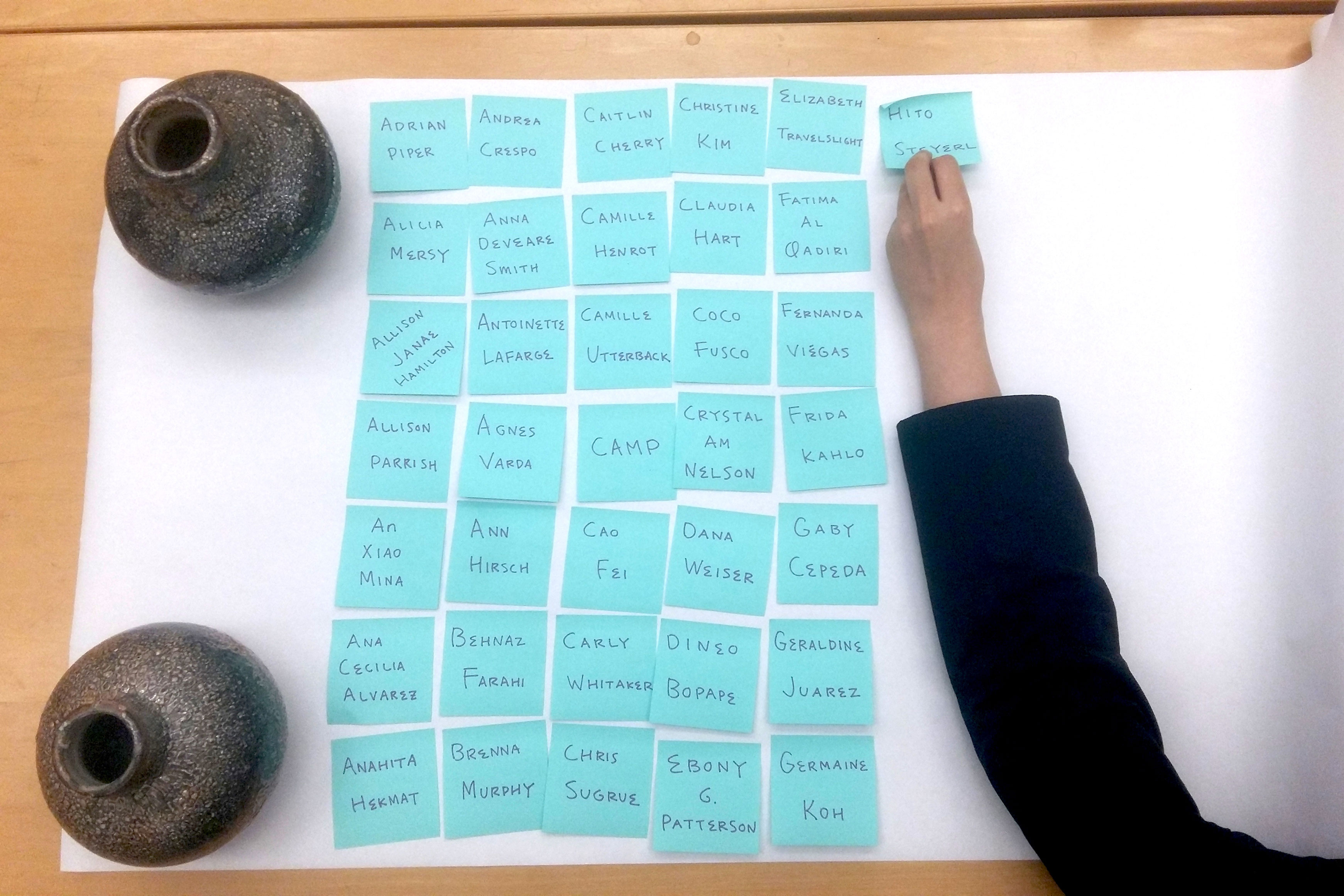
We worked in a large hotel room in a arts compound in Berlin that was a former factory. The first day we just talked about our personal backgrounds, and the ideas and experiences we thought were relevant to the topic. We each knew the organizer, Adam Hyde of FLOSSmanuals, and I knew Mushon Zer-Aviv who is one of my colleages from Eyebeam, but I had never met the remaining participants, Aleksandar Erkalovic, Mike Linksvayer, Alan Toner, and Marta Peirano. We didn’t even know who the other participants were until a few days began the sprint. As we introduced ourselves, our job was to write down all of the topics that came to mind, or were embedded inside of each presentation. We wrote these on post-it notes and put them up on the wall. By the time we broke for dinner there was a rainbow of 100 post it notes arrayed on the wall. We went out for dinner, and returned to arrange the notes on the wall in groupings. By the end of the night we agreed on a very very rough and rather generic outline: Introduction, Definitions, Process, Futures, Epilogue.

As we drank to our success, Stophen asked us if we ever doubted whether we would accomplish our crazy goal. I said that I never doubted, but Adam said that he was really worried when he returned the second morning to 100+ seemingly random notes on the wall, and a truly vague outline. But we started writing, each taking on a topic we were personally invested in. We wrote from 10am to midnight, with a break for dinner. We did this the remaining four days. One day we left to go to the open air Turkish markets near by to get more food for dinner. The Berliners left for the evenings, but the rest of us slept in the compound. Other than that I only left once to see a friend for a drink. We worked hard.

At the outset, Adam stated that he hoped we would write aout 17,000 words, which comes out to about 100 pages. A respectable, but thin volume. The main goal was to finish *something* and that hopefully that something would be cohesive. We ended up writing 33,000 words. We restructured the book several times, moving chapters in and out of sections, renaming, adding, and removing whole sections. We discovered topics that we realized needed to be covered, and we ended up not writing about many of the things we initially thought to be important. I can’t say for sure, as I am still way too close to the initial writing (we only finished 36 hours ago), but I really do think it is cohesive. Despite only working with each other for a total of 5 days, we quickly developed a common language, a strong working methodology that was a version of disciplined anarchy mixed with an immediate trust in each other to peer review and rewrite anything we had written ad hoc.

The book was written by artists who work with technology, and writers who write about technology, so it does take technology as a presumption. The book is very much about Free Software, and Free Culture. But what surprised all of us is that we never really talked about either of these specifically. For example, we almost never talked about licenses. What we did talk a lot about were principles and themes that related to any collaboration regardless of technological involvement or topical focus. We spent most of our time talking about about trust, openness, fairness, attribution, respect, organization, and goals. This was a collaboration that had all of these principles, plus it had great collaborators. It was an incredible success.

Posted in News | Also tagged , , , , |

Security Patterns video walkthrough

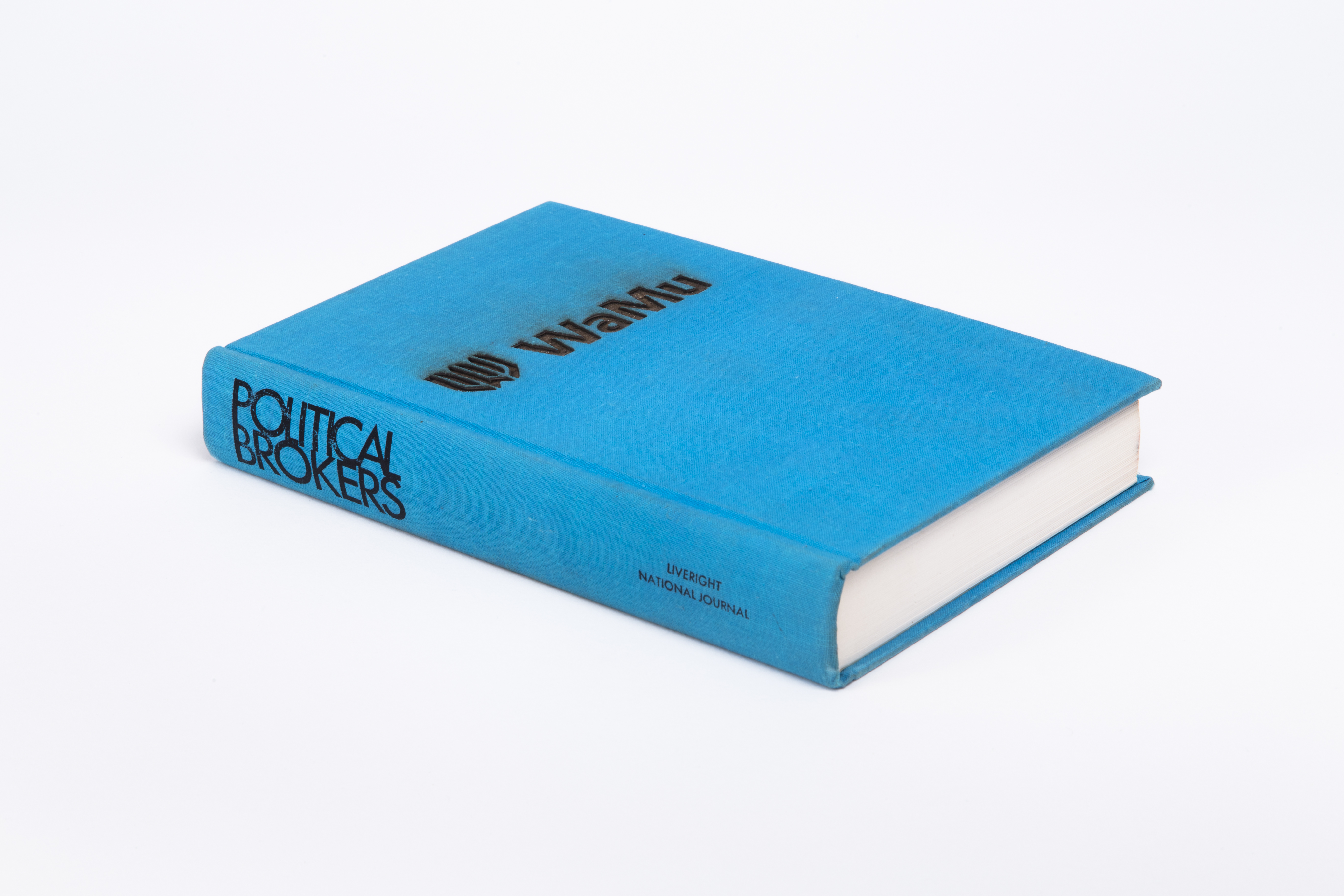
Security Patterns is a studio visit installation of recent laser cut work. These sculptures and drawings are made from old books laser cut with poignant words, and drawings made from industrial patterns, all of which explore transformations in technology and their relationships to evolutions (or devolutions) in economies. Some choice examples include: two display bookshelves with an ever growing collection of 130+ investment guide books and get-rich-quick books (e.g. “Weath is a Choice” or “Investing by the Stars”) all laser engraved with the logos of failed FDIC Insured banks, A shrink wrapped bundle of 12 Yellow Pages that have been cut all the way through with the phrase “GOOGLE” and a dictionary with the phrase “OMG LOL” cut from its pages.

I have previously burned the OED, Atlases, and Phonebooks. I am interested in exploring books, especially expensive reference books, as a symbol of technological obsolecense and consumption culture. Once they were a huge symbol of prestige, now they are a sign of a era whose time has passed away. I burn them with word and symbols, as a way of commenting on their technological obsolescence, and simultaneously restoring their aura as precious objects.

More images on this blog post, or on James Wagner’s review of his studio visit

Posted in Exhibitions, Videos | Also tagged , , , , , |

Eclectic Praise for Digital Foundations

Digital Foundations has received some eclectic and exciting praise. I have included some choice bits below, but my favorite are the numerous peers who have said more or less the same thing: “This is the book we have all been waiting for!”
This book is critically important for the arts. Far too few artists are sophisticated enough to be aware of the stealthily growing problem at hand: Corporate, cookie-cutter tools—and their manuals—that standardize and cramp creativity threaten to become the greatest shapers of late 20th & 21st century art, just as architecture’s greatest influence this past century has unfortunately been neither a renowned school of architecture, nor even a great architect, but the catalog of standardized options: door frames, windows, and other prefab parts, from which 99 percent of structures are now built. Artists will remain stuck with old patterns and limited options, unless we create viable open source alternatives and brilliant interventions like this book! John S. Johnson Chairman of the Pacific Foundation Founder of the Screenwriters Colony, The Filmmakers Collaborative and Eyebeam, Art + Technology center This is how I would describe the experience of reading Digital Foundations: I have learned to speak, say Swahili, because I’m hanging out with a lot of Somalians.  It takes me a few years maybe, but by now I’m pretty good at it. Then I come across this book, “How to speak Swahili” that goes over all the basics. And I’m like, whoa I’m glad I don’t have to learn Swahili all over again, this shit looks confusing, but this book makes it look so easy!  (big sigh of relief) Then I find some vocab I never even knew!  That will come in handy… Xan Young architect, Aedas LA Xan Young, a friend and architect
Posted in Press | Also tagged , |

Digital Foundations goes to reprints

Digital Foundations

Celebrate Small Victories: Digital Foundations has run through its initial print run of 8000 copies, and gone into reprints. The publisher has reprinted a run of 4000 copies to meet demand. This semester it was adopted at over 100 colleges and universities; hopefully that number will steadily increase semester by semester. But for now, we celebrate reprints!

Posted in News | Also tagged , , |

New Books in the works

xtine and I have been quietly working on two new books, one on Digital Imaging and Collage and the other on Web Design.  You can see the works in progress on the Digital Foundations wiki
Posted in Writing | Also tagged |

Digital Foundations

Digital Foundations uses formal exercises of the Bauhaus to teach the Adobe Creative Suite. All students of digital design and production—whether learning in a classroom or on their own—need to understand the basic principles of design in order to implement them using current software. Far too often design is left out of books that teach software for the trade and academic markets. Consequently, the design software training exercise is often a lost opportunity for visual learning.

Digital Foundations is creative commons licensed (CC+BY-NC-SA). Read the whole book on our wiki, and read more about the writing process on our Blog.

Digital Foundations
Book
xtine burrough
Also ported to Open Source software: Digital Foundations: Introduction to Media Design with FLOSS, ported by FLOSSmanuals.net community, 2009, print and online book. Translated to Spanish: Fundamentos Digitales: Introducción al diseño de medios con FLOSS, translated by Jennifer Dopazo and the FLOSSmanuals.net community, 2009, print and online book.
Posted in Selected Works, Works | Also tagged , , |